Football boots suitable for every type of pitch
The type of ground you play on determines the sole you need: a football boot designed for dry grass behaves differently on synthetic surfaces or on a wet surface. This selection brings together models classified by surface, from FG to SG, including AG, TF, and IC.
You can start with the surface you train on most often, then narrow down by brand and style.
How to choose your football boots based on the type of pitch?
The choice is based on the surface you play on most often, not on the model you like best. The sole and studs are designed for a specific ground: their number, shape and height vary from one category to another to provide grip without sticking to the ground. An ill-fitting pair leads to slipping, quick wear of the sole, or a foot getting stuck during pressure.
Ask yourself three questions before making a decision. What surface do you have your matches and trainings on, knowing that it’s not always the same? How many times do you play each week, which affects wear? And do you play outdoors all year round, even when the pitch gets heavy in winter? These three answers will guide you towards one of the selections below. If you then want to compare by brand or range, the overview page of football boots gathers the entire catalogue.
FG, SG, AG, TF, IC: what do the abbreviations on football boots mean?
These abbreviations refer to the type of ground for which the sole has been designed, and each corresponds to a dedicated selection that you can view separately:
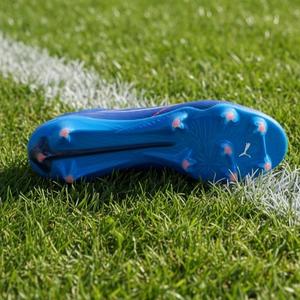
- The models for natural terrain FG, for Firm Ground, are made for natural grass in normal to dry conditions. This is the most common category in clubs and the logical starting point if you mostly play on grass.
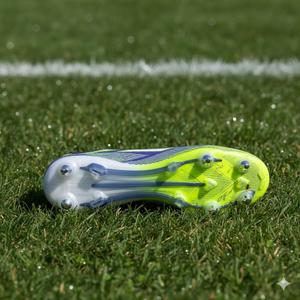
- The models for soft ground SG, for Soft Ground, are for soaked and muddy pitches. The studs are screw-in and replaceable, allowing you to adjust grip according to the state of the ground.
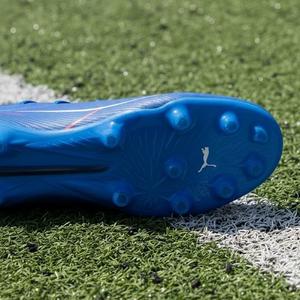
- The models for artificial ground AG, for Artificial Ground, are designed for synthetic grass, a harder and more abrasive surface than natural grass.
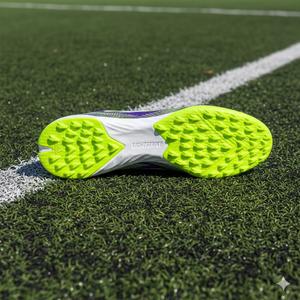
- The models for 5-a-side TF, for Turf, are suited for short synthetic grass, stabilised pitches, and five-a-side surfaces, with numerous short studs on the sole.
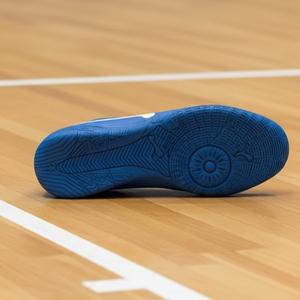
- The models marked IC, for indoor or futsal, are worn indoors on wood or smooth ground. They do not have studs but a flat rubber sole.
What’s the difference between FG and AG boots?
The difference lies in the hardness and abrasiveness of the targeted ground. Natural grass absorbs part of the impact and allows the studs to sink in, while synthetic surfaces are firmer and give drier footing. AG soles are made for this repeated contact with an artificial surface, while FG soles are designed for grass.
In practice, if you switch between the two surfaces throughout the week, first look at the one where you spend the most time. Many players prefer to go for a single suitable pair for their main surface rather than two specialized pairs. To compare directly, open the selections for natural terrain FG and artificial ground AG side by side.
Can you play on multiple pitches with the same pair?
It’s possible on occasion, but no sole covers all surfaces properly. A pair with screw-in studs is not meant for use on synthetic or indoor surfaces, for example: the sole is not designed for that contact and some gyms refuse shoes marked for ground. Conversely, an indoor pair won’t provide any grip on a muddy pitch.
If you really play on two different surfaces all year round, the usual solution is to keep one pair for outdoor use and one dedicated to five or futsal, which you can find in the selections for 5-a-side TF and futsal.
Which brands offer boots for every pitch?
Major sports brands offer most of their models in various soles, allowing you to choose a silhouette and then the version corresponding to your ground. If you prefer to start with the brand rather than the pitch, you can look at selections for Nike, adidas, Puma, or Mizuno. The other brands pages gather smaller manufacturers, useful if you’re looking for a cut or fit you can’t find elsewhere.
Two other sections may help you depending on your needs. The new arrivals show the models that have just come in, especially at the start of the 2026/27 season and with each colour change. The new packs gather coordinated releases, when a brand outfits several of its lines in the same theme. Finally, if you need to play very quickly, the shipped in 24h selection filters the pairs ready to go quickly.
Where to find football boots on promotion based on pitch?
The site has permanent commercial pages that let you track price drops without looking through products one by one. The promotions on football boots and good deals on shoes are the two sections to check first. The clearance shoes are more about end-of-line items and previous season colours: that’s often where the leftover sizes of renewed models can be found.
The timing is just as important as the page. The Black Friday on football boots kicks off the sequence, followed by the end-of-year holidays, and then the winter sales which you can find on the shoe sales page. The French Days in spring then take over from the special offers, before the summer sales. Other good moments are more discreet: when a new collection arrives in the new arrivals, previous colours gradually move to the good deals and clearance. If you’re not in a hurry and your size is common, this is the period to watch.
Frequently asked questions
How do I know which pitch I play on if my club has several surfaces?
Count the number of sessions per surface over a full month, including trainings, and choose the sole corresponding to the one you use most. Many clubs train on synthetic and play matches on grass, or the reverse depending on the weather. If you're really unsure, ask your coach what most of the group wears, that’s the most reliable indication.
Do SG screw-in studs work all year round?
They are designed for wet pitches, so their use is mainly during the winter period and on fields that hold water. On a dry and hard ground, the studs don’t sink in well and footing becomes uncomfortable. That’s why some players keep a pair of soft ground boots as a supplement to their main pair rather than as a replacement.
What shoe should I get for a child who is starting out?
For a beginner, the club’s training surface takes precedence over everything else, and the sole categories are the same as those for adults. TF stud models are often used in football schools because they are suitable for stabilised and short synthetic pitches that are common at that age. Make sure there’s a little room in the front of the foot, but not too much, as a shoe that’s too big hinders footing.
Do you need to set a high budget to play well?
No, the deciding factor remains the suitability between the sole and your pitch, not the model’s position in the range. More affordable versions of the same line generally replicate the silhouette and sole of the premium model but with different materials. If your budget is tight, check the football boot promotions first before moving down in range.
What is the most common mistake when choosing?
Choosing the pair worn by a professional player without checking the sole abbreviation is the most common mistake. The same model often exists in FG, AG, TF and sometimes IC, and only this mention indicates the targeted surface. Check the abbreviation before confirming, it’s indicated on each product sheet.