5-a-side football shoes: TF turf studs
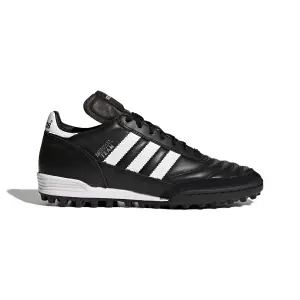
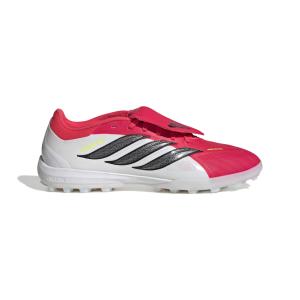
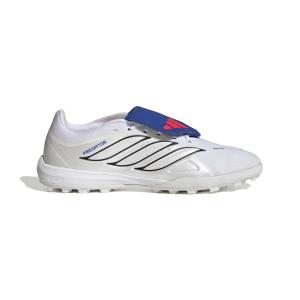
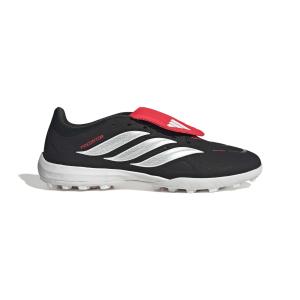
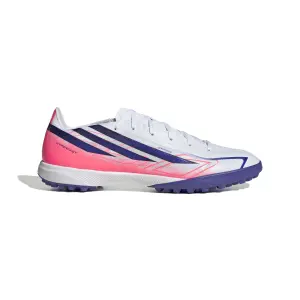
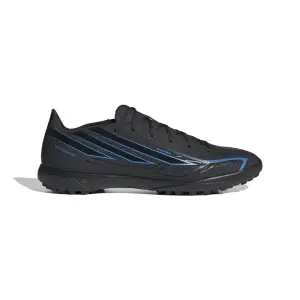
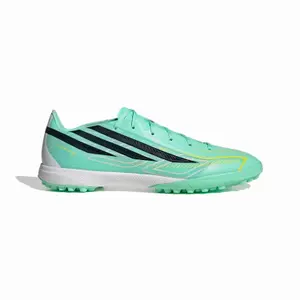
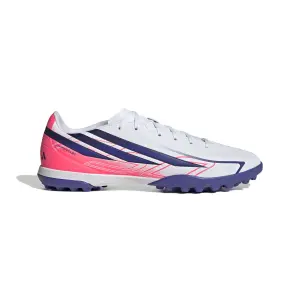
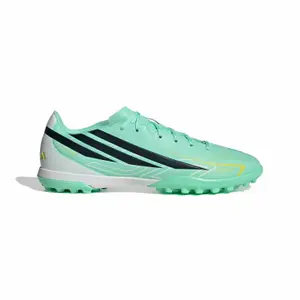
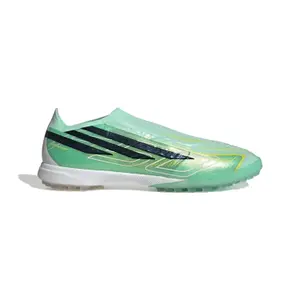
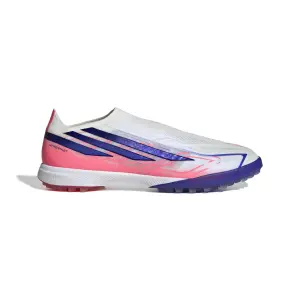
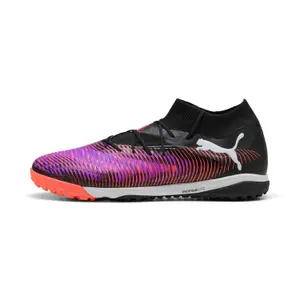
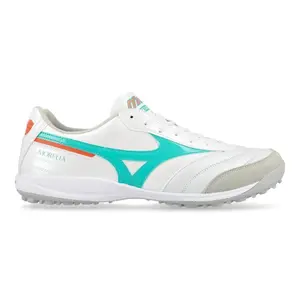
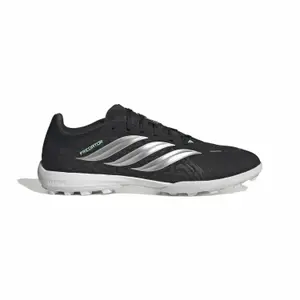

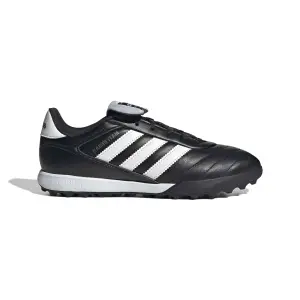
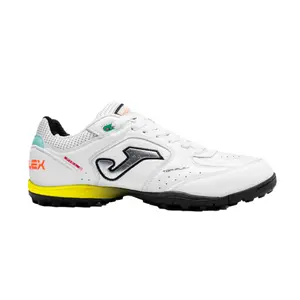
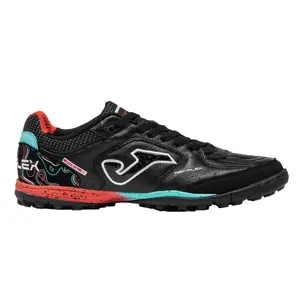
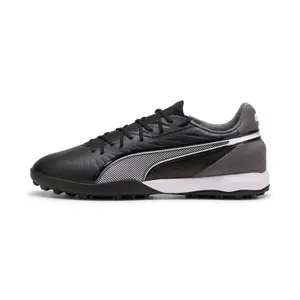
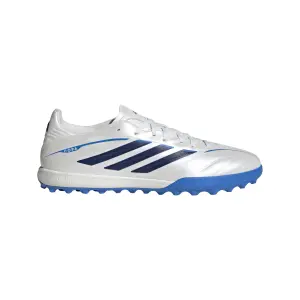
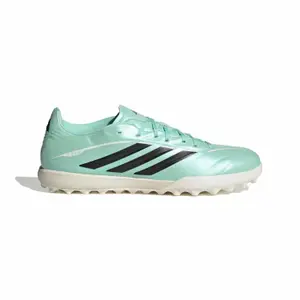
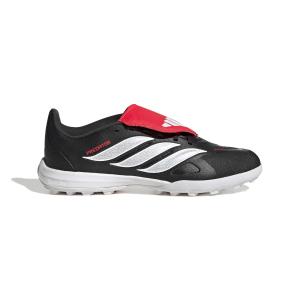
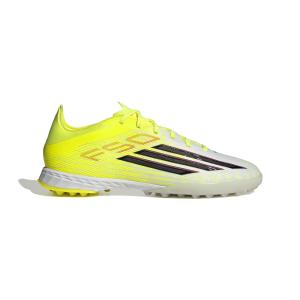
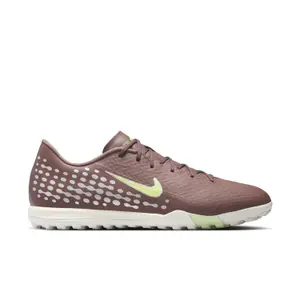
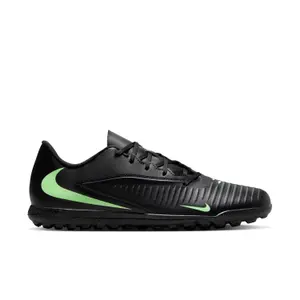
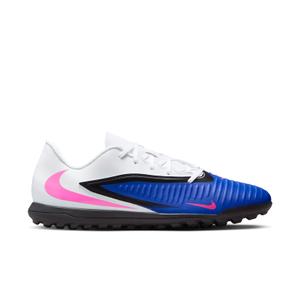
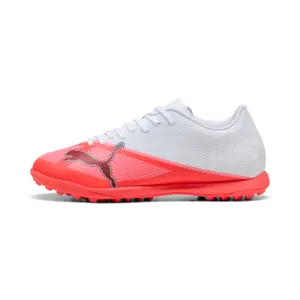
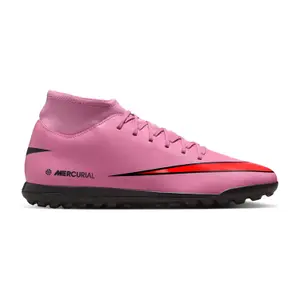
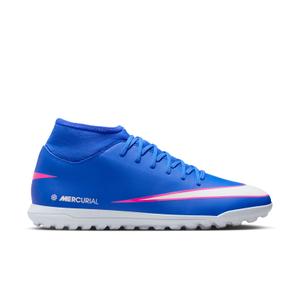
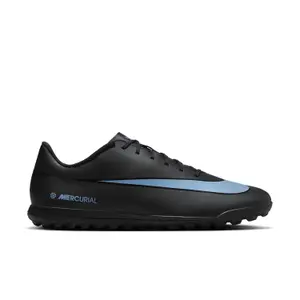
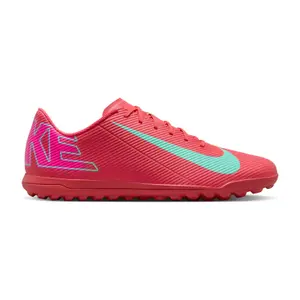
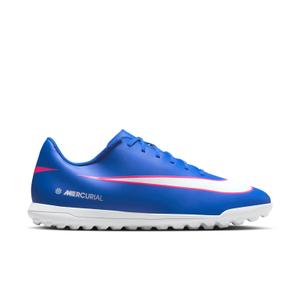
5-a-side football shoes with TF soles, also known as turf boots, are recognized by their soles covered in numerous small rubber studs. This base distributes pressure on hard surfaces: city stadiums, old synthetic pitches, stabilized fields, or frozen ground.
Here you can find TF models sorted by brand, colour, and size, perfect for 5-a-side games with friends or regular training on small pitches.
What is a TF 5-a-side football boot?
A TF 5-a-side football boot is a type of football shoe with a sole covered in a multitude of small rubber studs spread across the entire surface. The TF stands for turf, which means synthetic grass, and it’s included in the name of the model by most brands. Unlike a boot with moulded studs, which digs in with a few deep points on the ground, the turf sole remains almost flat and maximises contact points.
You can feel the difference within minutes: the grip comes from the number of studs and their rubber material, not their length. On a hard surface, this prevents the sensation of walking on spikes and limits jolts to the knee and ankle. This is also why these boots have become the norm for 5-a-side and 7-a-side football in cities, where the game is quick, played in small spaces, with lots of changes of direction.
On which surfaces should you wear turf studs?
Turf studs are made for hard and short surfaces: city pitches, first-generation synthetic grass with short pile, stabilised grounds, sandy ground, dried and compact ground at the end of summer, and often on frozen fields in winter. These are exactly the types of surfaces where long studs do not sink and transmit impact back into the leg.
Also consider uses that are not official matches. A pair of TF boots is great for warming up, technical sessions, Thursday night 5-a-side with colleagues, or as a backup pair in your bag when the planned pitch changes at the last minute. Many players keep TF boots in addition to a pair designed for full-sized pitches, simply because they can be worn anywhere without damaging the surface.
On the other hand, the turf sole is not made for thick or muddy natural grass: the studs won’t grip and your foot will slip. It is also not designed for a gym floor, where a flat, non-marking rubber sole is required.
TF, AG, FG, SG or indoor: which sole to choose based on the surface?
Each abbreviation corresponds to a specific type of ground, and it’s the surface you play on most often that should dictate your choice, not the model you like. Foot-Store categorizes football shoes by type of surface, which makes it easy to compare soles before looking at colours:
- FG shoes for natural ground, the most common sole designed for dry or well-maintained natural grass, with fairly long moulded studs for gripping the grass.
- SG shoes with removable studs, for thick and muddy grass in autumn and winter, where you need long and often metallic studs to avoid slipping.
- AG shoes for synthetic surfaces, designed for recent artificial grass filled with pellets, with more numerous and shorter studs than on FG boots.
- futsal and indoor shoes, with a flat rubber sole for gym floors and smooth surfaces.
The most common confusion is between AG and TF, as both refer to synthetic surfaces. Remember that AG is for long filled artificial grass, where the stud sinks in, whereas TF is for short synthetic grass and hard surfaces, where the sole remains on top.
How to choose your TF boots for 5-a-side football?
Start with the ground you play on every week, then look at the upper and size. On a city pitch, the contacts are short and repetitive: an upper that holds the foot well on the sides is more useful than a very thin upper designed for straight-line speed.
For the material, a soft synthetic upper dries quickly and withstands the friction of concrete and short grass, while leather, which is more enveloping, shapes to the foot over time and suits players looking for immediate comfort across the width. The high collar, present on some models, adds support to the ankle and a seamless connection between the leg and foot, but it ultimately comes down to personal preference.
In terms of size, leave about half a centimetre in front of your big toe: football boots should fit snugly, never so tight that they cramp your toes. If you play with thick socks or shin guards with integrated socks, try them on with this gear. And if you’re torn between two sizes on a narrow model, going with the larger size avoids pressure points after twenty minutes of play.
How long do turf shoes last?
The lifespan of a pair of TF boots mainly depends on the ground: concrete and short synthetic grass wear the rubber of the studs down faster than natural grass. The telltale sign is the height of the studs at the forefoot, under the pressure area: when they’re flattened and you start to slip during changes of direction, the sole has reached the end of its life, even if the upper looks new.
To prolong their lifespan, remove dirt and pellets after use, let them air dry away from heaters, and avoid walking for extended periods on tarmac in them. Rotating between two pairs, when possible, allows the rubber and upper to regain their shape between matches.
Good deals, sales, and clearance on football shoes
Great deals on TF shoes can be found on the commercial pages of the site, which buzz all year round with new collection releases. The promotions on football boots and clearance footwear feature models soon to be replaced, often the same soles in a colour from the previous season. The shoe deals gather the current offers all in one place.
The calendar gives simple reference points. The Black Friday for football shoes kicks off the busiest period of the year, followed by the end-of-year holidays, when a pair of TF boots easily fits into a gift list. Then come the winter sales on shoes, followed by the French Days in spring, before the summer sales and the start of the 2026/27 season.
If you’re more interested in the latest model, check out the new football shoes featuring the latest soles and the newest colours added to the catalogue. And as the match approaches, the selection of shoes dispatched within 24 hours puts together pairs ready to go quickly.
Frequently asked questions
Can you play on natural grass with TF shoes?
On dry, short natural grass, a pair of TF boots will work without particular danger, although the grip will be less than that of an FG sole. Once the grass is tall, wet, or muddy, the studs won’t penetrate the ground, and your foot will slip during contacts and changes of direction. To play regularly on grass, it's better to have a pair with moulded studs.
What’s the difference between TF boots and regular sports trainers?
A TF boot has a low, slim upper designed for contact with the ball, without the extra cushioning of running shoes or sneakers. Its studded sole is made to grip on a playing surface, whereas a street sneaker remains smooth. Lateral support is also more pronounced, as the game requires side-pressing that walking never demands.
Can children use turf shoes in clubs?
Younger categories often train on city pitches or short synthetic surfaces, both of which are suitable and comfortable for turf soles. Clubs sometimes specify a particular sole for matches, so it’s best to check with the coach before buying. Many TF models are available in junior sizes with the same sole as the adults.
Should you take the same size in TF as in your street shoes?
Not always: football shoes fit more snugly than street shoes, and sizes can vary from one brand and line to another. A useful measure is the length of your foot from heel to toe, compared to the brand’s sizing guide. If you're in doubt between two sizes on a narrow model, the larger size is safer.
Is it better to buy a pair of TF from the previous season?
A model from the last season retains the same sole and construction as when it was released; only the colour usually changes. This is why clearance and deal pages are appealing when budget is a concern. If you want the latest update of a line, check out the new arrivals, as brands regularly revise the upper and sole design.