Football boots for soft ground: screw-in studs SG
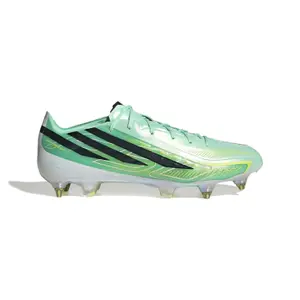
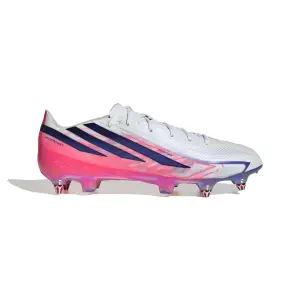
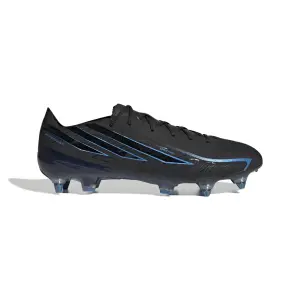
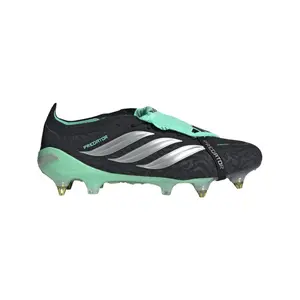
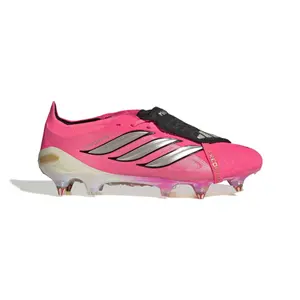
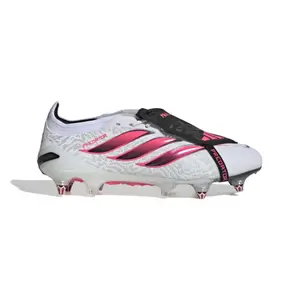
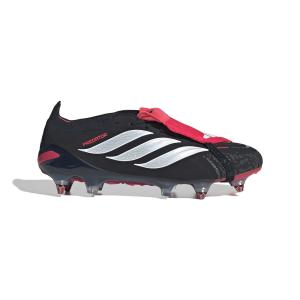
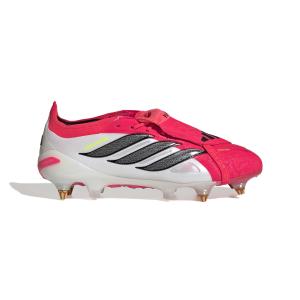
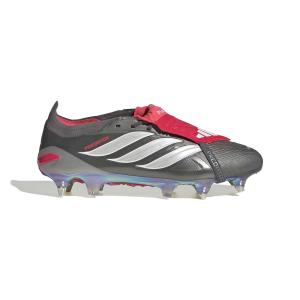
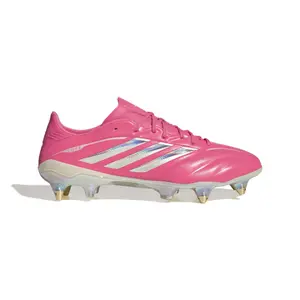

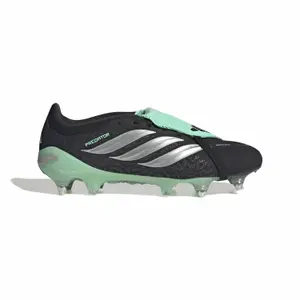
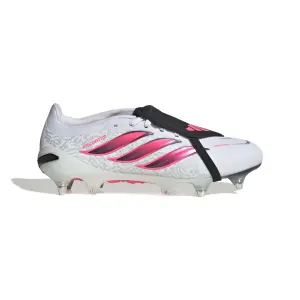

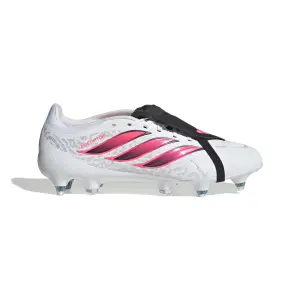
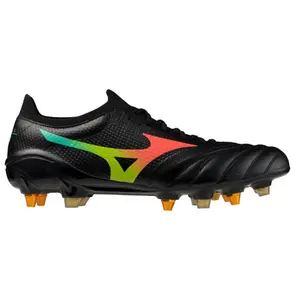
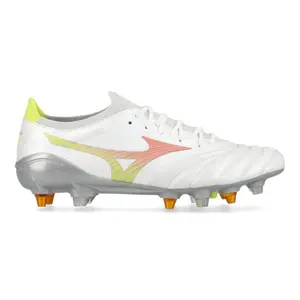
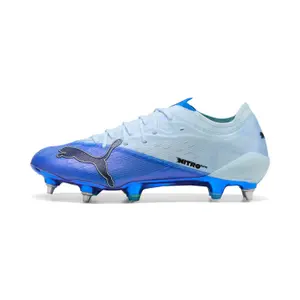
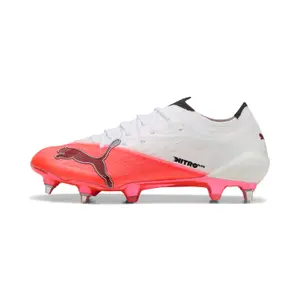
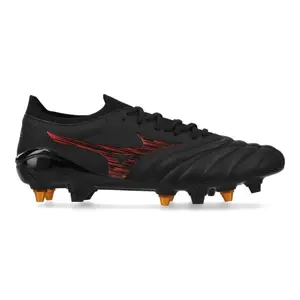



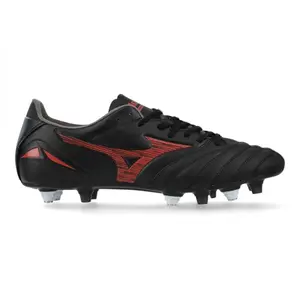

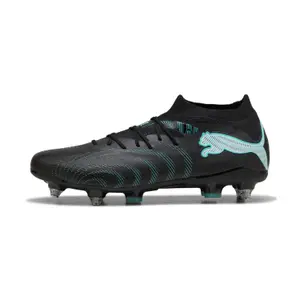
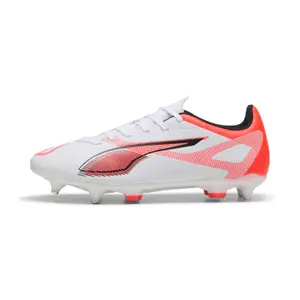

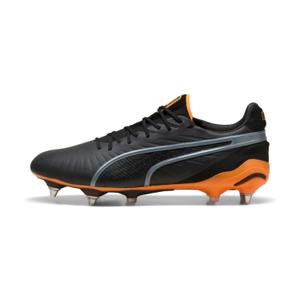
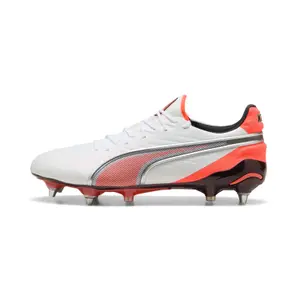

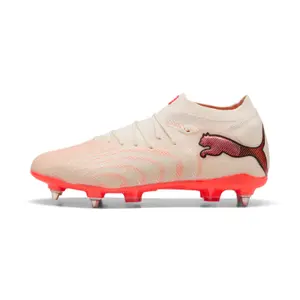


Football boots for soft ground are identifiable by the SG symbol, which stands for soft ground. Their sole features longer and fewer studs, which are screwed in, to provide grip on wet or muddy pitches.
Here you will find the screwed models from the catalogue, to compare with other soles if you also play on dry or synthetic surfaces.
What are football boots for soft ground used for?
Football boots for soft ground are designed to maintain grip on a soaked, soft, or muddy pitch, where standard soles tend to slip. The SG symbol stands for soft ground: it refers to soles fitted with longer and fewer studs than other models. These studs penetrate the ground instead of staying on the surface, which limits slipping when pushing off, changing direction, and starting. These boots are mainly used on grass pitches during the peak season, between autumn and late winter, when rain has softened the ground.
The mechanical aspect is also important: on soft ground, a short stud doesn’t dig in enough, causing the foot to slip with the surface. A long stud can reach a firmer layer beneath the mud. That’s why a pair of SG boots is made for seasonal use rather than year-round.
How to identify an SG pair among the FG, AG, TF, and IC symbols?
The symbol is indicated in the model's name, right after the reference, and each letter corresponds to a type of playing surface. Here’s how to read them:
- SG: soft ground, wet and damp terrain, removable studded sole.
- FG: firm ground, dry or firm natural grass, moulded studs.
- AG: artificial ground, long synthetic turf, shorter and more numerous moulded studs.
- TF: turf, stabilized and short synthetic for 5-a-side football, sole covered with small studs.
- IC: indoor court, hall and futsal, flat rubber sole.
Some pairs have a combined mention, like FG/AG or SG-Pro, indicating that the sole is designed for multiple surfaces. If in doubt, check the sole: if the studs are removable, it’s an SG pair.
Metal or aluminium studs: what should you know before buying?
Removable studs can be changed when they wear out or adjusted to the condition of the pitch. Stud sets usually come in several lengths, with the shortest for simply damp ground and the longest for really muddy ground. Fitting requires a dedicated key, and it’s best to check the tightening before each match, as a loose stud can come off easily.
One important point to know before buying: metal studs are banned or regulated in certain youth competitions and some sports complexes, and they are prohibited on synthetic grass as they damage it. Check with your club or referee if you are playing in a youth category. On this point, a moulded sole remains the default choice when the rules require it.
Do you need an SG pair if you also play on dry and synthetic surfaces?
Not necessarily: an SG pair is a supplement, rarely a single pair. Removable studs are made for a surface that gives way under pressure, and on a hard pitch or synthetic surface, long studs don’t dig in, pushing back into the sole and becoming uncomfortable underfoot. Many players therefore keep a moulded pair for training and good weather, and use the SG studs when the ground turns to mud. If you want just one pair and your pitch is playable all year round, an FG sole covers more situations.
Dry, synthetic, indoor: which sole for which surface?
The catalogue is sorted by type of pitch, allowing you to compare soles before making a choice:
- FG natural pitch boots, with moulded studs, for dry or firm grass, the most common case throughout the season.
- AG synthetic pitch boots, with soles designed to distribute weight on long artificial grass.
- TF 5-a-side football boots, with studs, for stabilized and short synthetic surfaces in urban complexes.
- Indoor and futsal boots, with flat rubber soles, for gym floors and smooth surfaces.
If you're still unsure about the surface you play on the most, the page labelled football boots by pitch type collects all these soles in one place.
How to maintain removable studs after a match on soft ground?
Maintenance starts as soon as you leave the pitch, by removing the still damp dirt before it dries on the upper and around the studs. A soft brush, clear water, and a cloth are usually enough, without soaking the shoe or putting it in the washing machine. Drying should be done in open air at room temperature, never on a radiator, as direct heat stiffens materials and can detach the soles. Don’t forget to unscrew the studs from time to time to prevent them from getting stuck in their fittings, and to check their wear before heading out to play again.
Where to find discounted SG studs on Foot-Store?
Discounted models are gathered on dedicated pages, which change with new collections and commercial seasons. SG pairs often appear towards the end of winter and when a new generation of soles is released, as previous season items make way for them.
- Deals on shoes and promotions on football boots bring together pairs with updated prices, across all surfaces.
- The clearance section for shoes covers end-of-series and remaining sizes, the first place to look if your size is common.
- The Black Friday promotions on football boots kick off the discount season, followed by the year-end holidays, then winter sales and the French Days in spring, which return every year at the same times.
- New shoe arrivals show the latest soles on the market, useful to see what replaces a model you know.
- The selection of items dispatched in 24 hours includes the quickest-selling pairs, to check when your match is approaching.
To keep track of all site operations beyond the shoes, the deal, sales, and clearance pages cover the entire catalogue.
Frequently Asked Questions
Can you play on hard ground with SG studs?
It’s possible occasionally, but not recommended. On hard ground, removable studs don’t dig in and transmit weight directly under the arch of the foot, which becomes uncomfortable and wears the sole out prematurely. For a dry pitch, an FG sole with moulded studs remains the best choice.
Are removable studs allowed for youth players in clubs?
It depends on the competition regulations and club guidelines. Some youth categories limit or ban metal studs for safety reasons, and referees check shoes before kick-off. The simplest approach is to ask the coach before buying a pair of removable studs.
What size should you get for soft ground football boots?
The usual rule is to leave about half a centimetre between the longest toe and the tip of the shoe, with the foot pressed down. Cuts vary from brand to brand and between ranges, so it's better to follow the model's size guide rather than your usual size. If you play with thick socks in winter, take that into account when trying them on.
Do you need to buy replacement studs separately?
An SG pair comes with a set of studs already fitted, ready to play. The studs wear over time and can be replaced individually, and some players have multiple lengths to adapt to pitch conditions. Availability of replacement sets depends on brands and models, and it is noted on the specific product page.
Is it better to wait for a promotion to buy a pair for soft ground?
It all depends on your schedule: if your season is starting, waiting means playing with an unsuitable pair on already muddy ground. If you can wait, commercial periods like Black Friday and then the winter sales are when you have the widest choice of discounted pairs. The deal and clearance pages on the site allow you to keep track of these movements all year round.