Futsal and indoor football shoes
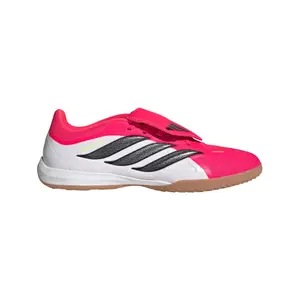
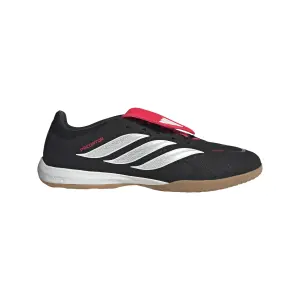
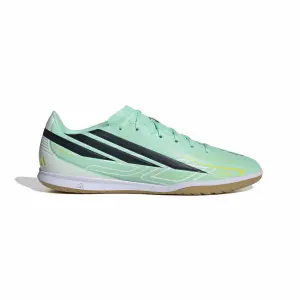
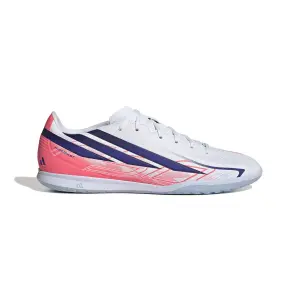
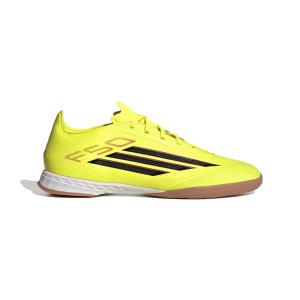
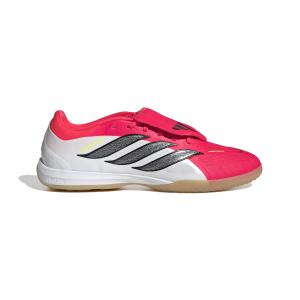
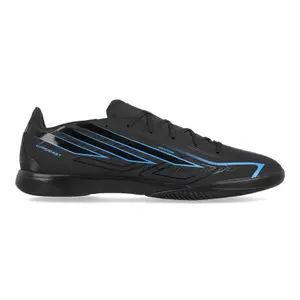
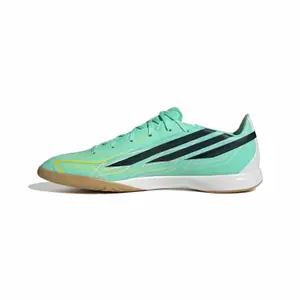
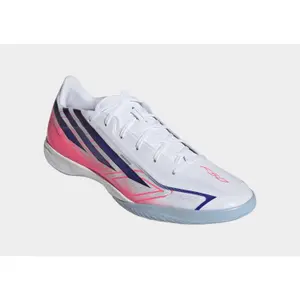
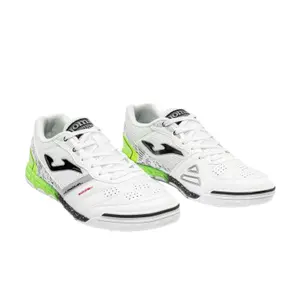
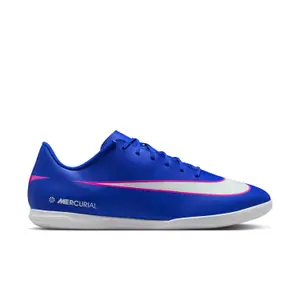
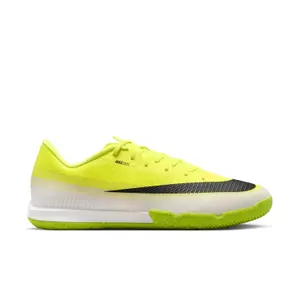
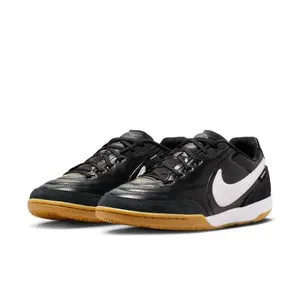
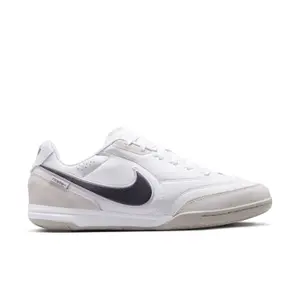
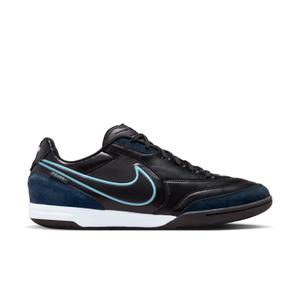
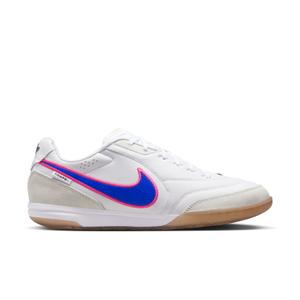
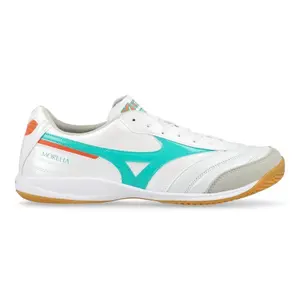
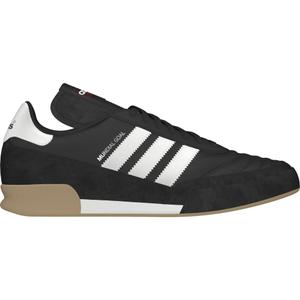
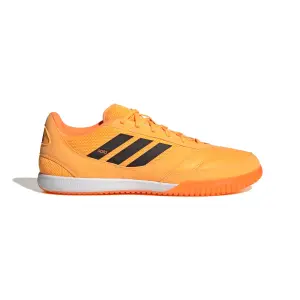
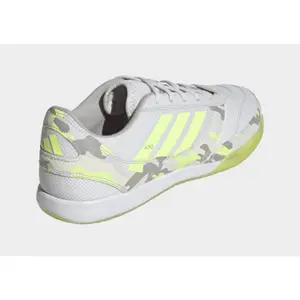
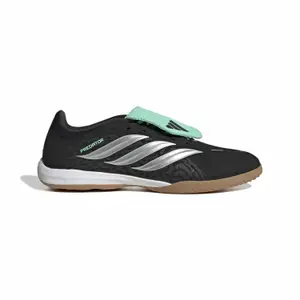
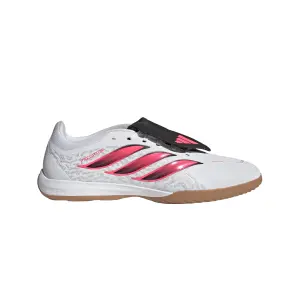
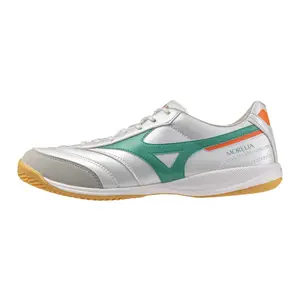
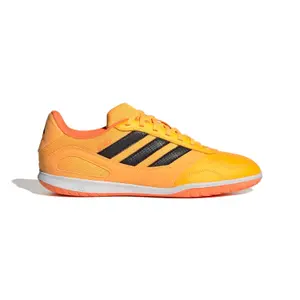
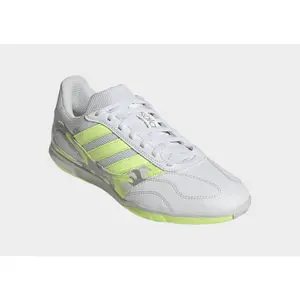
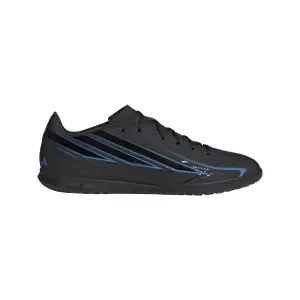
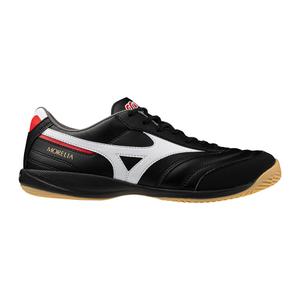
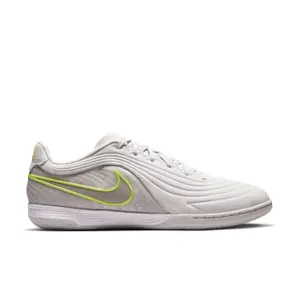
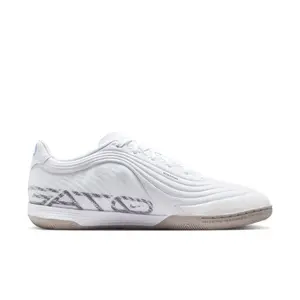
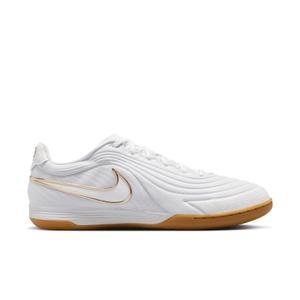
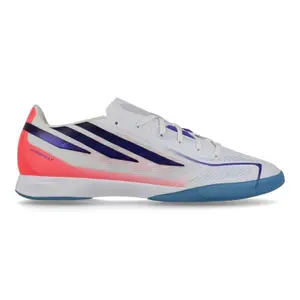
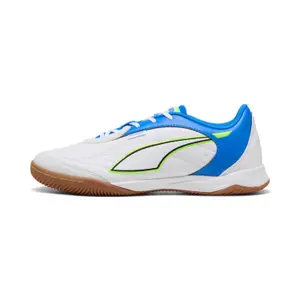
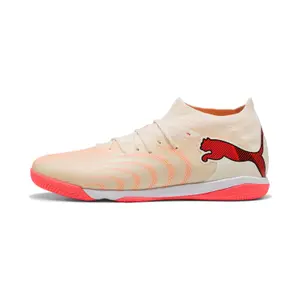
Futsal shoes are pairs designed for playing indoor football, on hardwood or smooth surfaces. They are identifiable by their flat rubber soles, with no studs, which grip a hard surface without leaving marks.
Here you will find indoor football models from major brands, to compare according to the surface of your hall, your fit, and your level of practice.
What is the purpose of futsal shoes?
A futsal shoe is used to play football on a hard, covered surface, mainly wood, lino, or resin found in gymnasiums. Its sole is flat and made of rubber: it adheres by contact with the floor, whereas a pair with studs seeks grip by penetrating the surface. This sole is also designed not to leave black marks on a wooden floor, which is a requirement many gyms impose on their users. The upper part is often low and close to the foot, prioritising ball touch and short support, as futsal is played in a confined space with many direction changes.
How to recognise a pair of futsal shoes in the model name?
Futsal shoes bear the IC symbol in the model name, which stands for Indoor Court. This is the convention used by manufacturers to differentiate the soles: IC for indoor, TF for the small studs of five-a-side football, FG, SG, and AG for outdoor pitches. If you're hesitating between two pairs with the same name, it's these two letters that make all the difference, not the colour or the upper. Check them before ordering; this is the easiest way to avoid an unsuitable pair for your gym.
Futsal, five-a-side, natural pitch: which sole for which surface?
Each type of ground has its sole, and the catalogue is organised by surface so you can compare truly comparable pairs. Here are the other pages of the selection by terrain:
- Five-a-side football in TF, for soles with multiple small studs used on synthetic pitches in urban stadiums and covered facilities with short grass.
- Natural pitch in FG, for well-maintained classic lawns, the most common case in clubs.
- Soft ground in SG, with screw-in studs designed for winter's soggy grass pitches.
- Synthetic pitch in AG, for artificial lawns with long fibres.
- The page for shoes by type of ground, if you want to see all the soles side by side before deciding.
A common confusion arises: IC and TF pairs are not interchangeable. The studs of a TF do not grip well on a smooth wooden floor and wear out quickly, while a flat rubber sole slips on a synthetic surface that is a bit cropped. If you play both, two distinct pairs remain the most durable solution.
How to choose the size of futsal shoes?
A futsal shoe should fit closely to the foot, with minimal space between the longest toe and the end of the shoe. Futsal involves lots of stops and lateral support: a foot that moves inside the shoe causes friction and reduces accuracy during changes of support. Use your usual shoe size as a starting point and then adjust according to the fit of the model, as some uppers are narrower than others. Try them on with the socks you wear during matches, as their thickness can change the feel more than you think.
Which pair to choose based on your level and frequency of play?
The choice mainly depends on how many sessions you have per week and how you use the shoe. For weekly casual play with friends, a simple pair with a synthetic upper, comfortable from the first use, is more than sufficient. For competitions or multiple sessions per week, higher-end models offer firmer support, a thinner upper for better ball contact, and a sole designed for repeated support. Major brands often offer most of their football shoe lines in indoor versions, allowing you to find in IC the same fit as a model you're already familiar with on grass.
How to make futsal shoes last longer?
The main rule is simple: a pair of futsal shoes should be kept for indoor use. Wearing them on the street, on concrete or gravel, wears down the rubber of the sole and causes it to lose its grip in just a few weeks, which is precisely the quality you bought them for. Carry them in a bag and change shoes at the entrance to the gym, as many gyms require this anyway. After your session, take them out of the bag and let them dry in the open air, away from direct heat sources that could harden the upper and the adhesives.
Where to find futsal shoes on sale?
Discounted indoor models can be found on the commercial pages of the site, which are constantly updated. The selection of great shoe deals compiles current offers, while the shoe clearance features end-of-line items and remaining sizes, and the football shoe promotions gather ongoing discounts across all soles.
There are several times during the year that warrant frequent visits. The Black Friday for football shoes kicks it off, followed by the end-of-year holidays, the winter sales, and finally the French Days in spring. It's also during these periods that the colours of the previous collection become the most appealing, at the same model.
If you're instead looking for the latest releases, the latest football shoe arrivals showcase the newest models. And when your session is approaching, the selection of shoes shipped in 24 hours lets you filter the pairs that will ship the quickest.
Frequently asked questions
Can you play futsal with regular sports trainers?
It's possible for an impromptu session, but it's not the same product. A running trainer is designed for forward movement, with a thick and cushioned sole that becomes unstable during the lateral supports required in futsal. An IC shoe is flatter, lower, and its rubber is designed for grip on hard floors, which reduces ankle twists and improves contact with the ball.
Should you take the same size as with studded shoes?
Often yes, but this varies from model to model. The cuts can differ from brand to brand and sometimes from line to line within the same brand, with some being significantly narrower. The safest approach is to start from your usual size and then check the fit around the heel and the space in front of the toes once the pair is laced up.
Do futsal shoes wear out if I play outside with them?
Yes, wear is quick on an abrasive surface. Concrete, asphalt, and gravel polish the flat rubber, which then loses the grip required on wood. For outdoor play on a hard or short synthetic surface, a TF sole is much better suited and will last much longer.
Is a high-end model necessary for futsal with friends?
No, an entry or mid-range pair is more than adequate for casual play. The difference is mainly in the fineness of the upper, the quality of the support, and the behaviour of the sole during intense and repeated sessions. If you play once a week, immediate comfort and the right size are more important than the quality level.
How do I know if my pair is allowed in my gym?
Most gyms require a non-marking sole, meaning it doesn't leave marks on the floor. Futsal shoes with IC soles are designed for this, unlike shoes with studs or spikes. If in doubt, a light-coloured rubber and the absence of pronounced texture are good indicators, and the regulations posted at the gym entrance will clarify any questions.