Football shoes adidas: F50, Predator and Copa
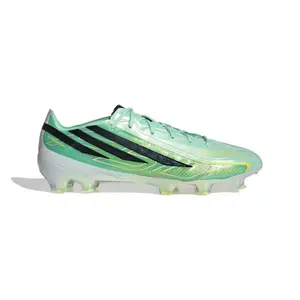
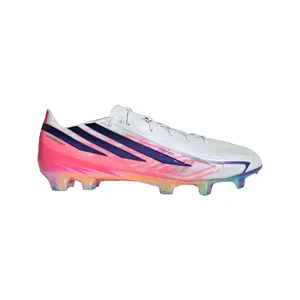
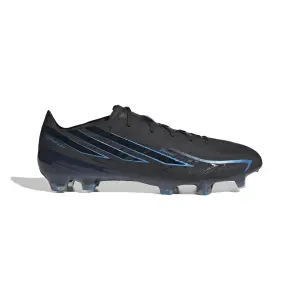
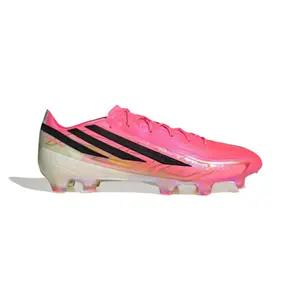
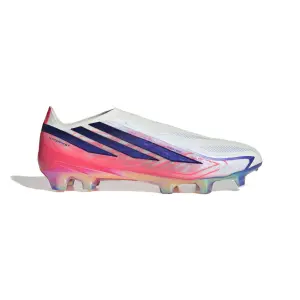
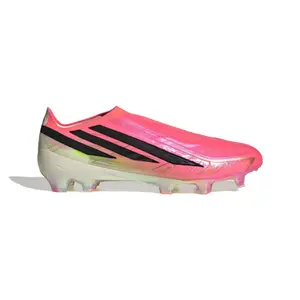
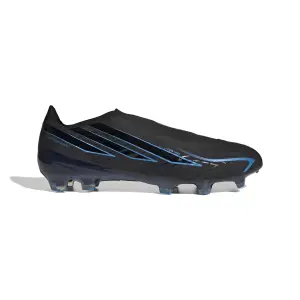
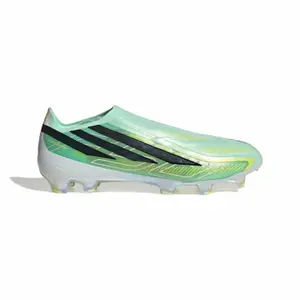
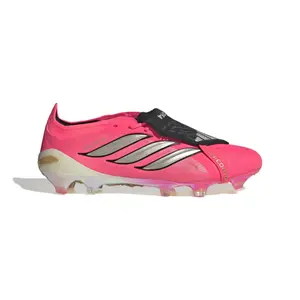
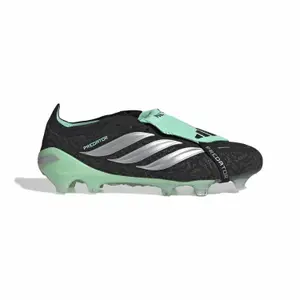
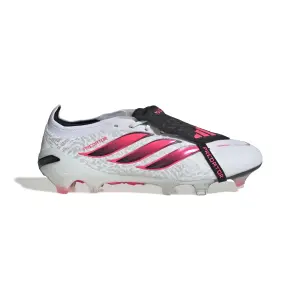
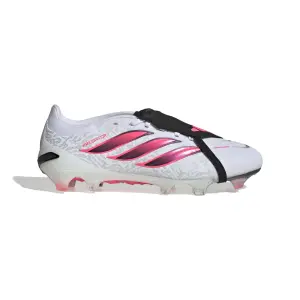
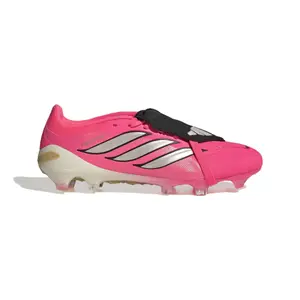
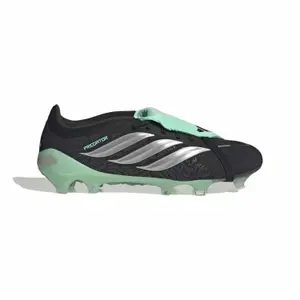
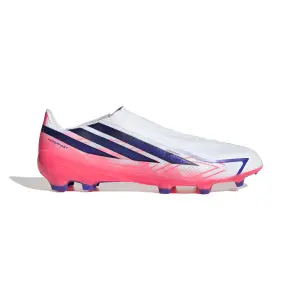
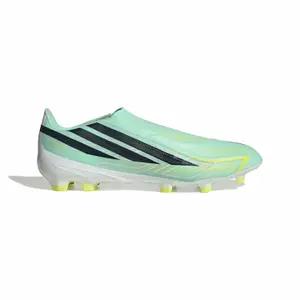
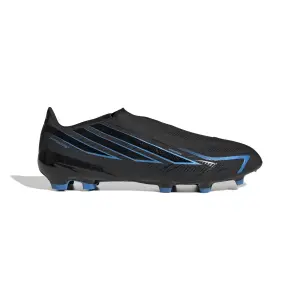
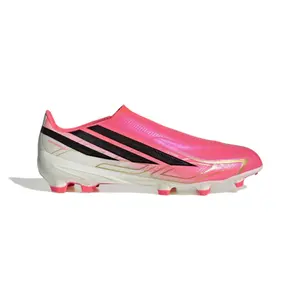
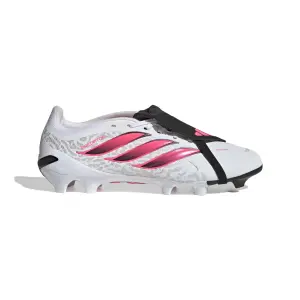
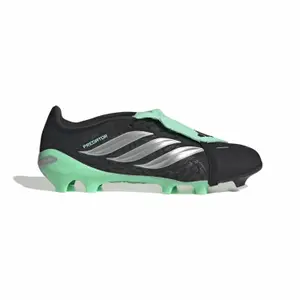
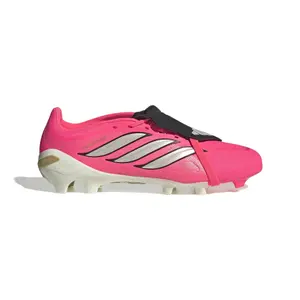
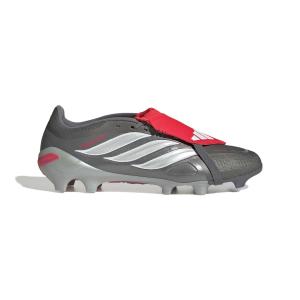
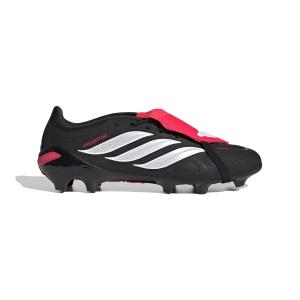
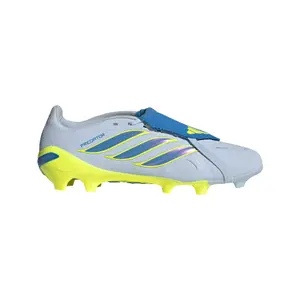
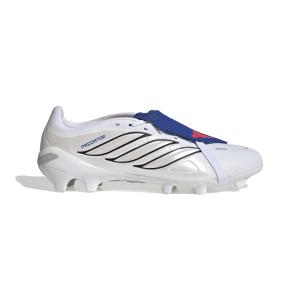
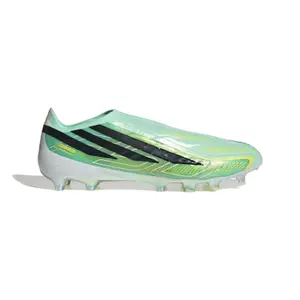
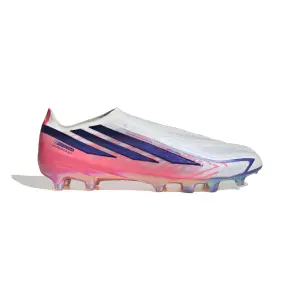
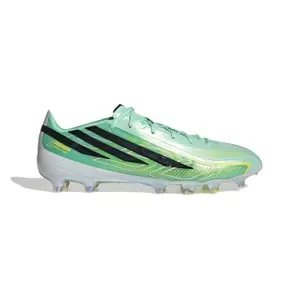
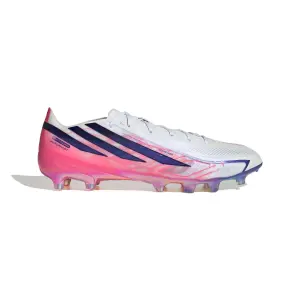
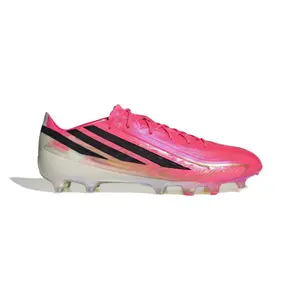
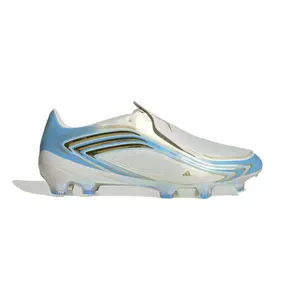
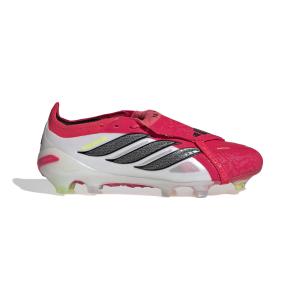
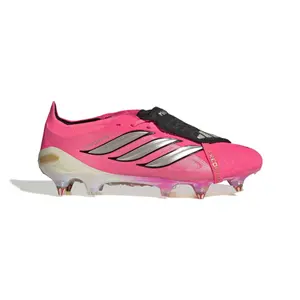
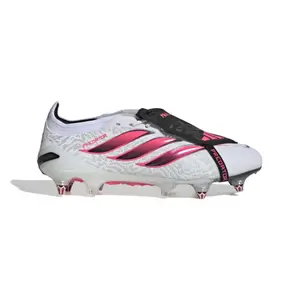
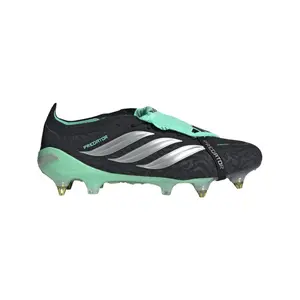
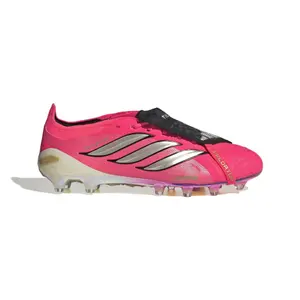
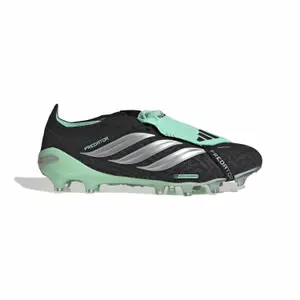
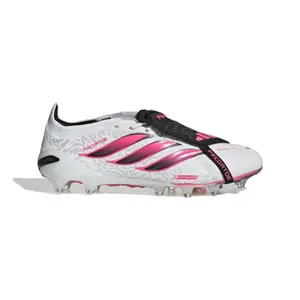
Find the football boots adidas from its three current silos: the F50 for speed, the Predator for control and striking, and the Copa for ball control.
Which adidas shoe to choose based on your playing style?
adidas offers its football shoes in three silos, each designed for a different playing style. The choice starts here, before the colour and budget: a pair designed for speed will never provide the same striking sensations as a pair designed for control, regardless of the price.
F50: speed
The F50 is the shoe for players who rely on their support and acceleration. Minimalist upper, lightweight, very direct ball feel: it is aimed at wingers, deep strikers, and anyone who frequently takes the ball while running. It’s our best-selling silo and features the signature editions of Lionel Messi and Lamine Yamal.
Its fit is narrow and close to the foot, which is part of the concept: the shoe should be forgotten. If you have wide or strong feet, try it on before deciding, or consider the Copa.
Predator: control and striking
The Predator is the deliberate opposite of the F50. Its upper, designed for striking, seeks grip with the ball: spin on crosses, accuracy on long passes, power on shots. Midfielders, playmakers, and defenders who restart the game with long passes find what has made this model famous since the 1990s, with today’s editions paying tribute to David Beckham and Kaká.
It’s also the most enveloping of the three, providing more support over the instep. It weighs a bit more than an F50, but most players don’t notice the difference, which matters if you’re looking for the lightest possible sensation.
Copa: touch and comfort
The Copa traces its lineage back to the Copa Mundial of 1982. It focuses on immediate comfort and a soft touch, without the very tight fit of performance silos. It’s the choice for players with wide feet, those who don’t like overly stiff sensations, and those who want a comfortable pair right from the first session rather than after three weeks of breaking in.
Sala: futsal and indoor
The Sala range is a category of its own: flat rubber sole, designed for indoor courts and futsal. It’s not a smooth-soled outdoor shoe but a proper indoor shoe, with the grip and protection this game requires.
Elite, Pro, League, Club: what changes with the level of range?
The same silo exists in four levels, and the difference is not cosmetic. It involves the upper, the outsole, and therefore the lifespan of the pair.
- Elite: the version for professional players. Thinnest upper, stiffest and lightest sole, maximum sensations. It’s also the least forgiving if you play on damaged pitches or three times a week.
- Pro: similar to the Elite in shape and upper, with a more accessible sole. A good compromise for a regular competitive player.
- League: the most versatile version. Thicker, more durable upper, designed to withstand several training sessions a week without losing shape.
- Club: the entry-level option, made for beginners, for growing youths or for a second training pair.
A piece of advice that applies to all four: for a given budget, it's better to choose the right sole for your pitch than to opt for a higher range level. An Elite FG on a hard synthetic wears out quickly, and you will feel that in your support long before the shoe is unusable.
Which sole for your pitch?
The suffix that follows the model name indicates the sole, that is, the type of ground for which the pair is designed. This is the criterion that has the most effect on your comfort, stability, and the shoe’s lifespan.
- FG (Firm Ground): dry or slightly wet natural turf. It’s by far the most demanded sole, suitable for the majority of players in France.
- AG (Artificial Ground): synthetic grass. Shorter and more numerous studs, to better distribute support and limit pressure on knees and ankles.
- SG (Soft Ground): wet and muddy ground. Long studs, often screwed and interchangeable, reserved for natural surfaces.
- TF (Turf): stabilized ground, sand, or old synthetic. A multitude of small studs, ideal for futsal and training.
- IN (Indoor): futsal and indoor, flat rubber sole.
Two costly mistakes can be made. First, playing in SG on synthetic: the long studs don’t penetrate, support becomes unstable, and the risk of injury increases. Secondly, using an FG on stabilized surfaces: the studs will wear down in a few weeks, and the pair will lose its grip.
If you alternate between several pitches during the week, look for mixed soles FG/MG, available on several League models: they better withstand the transition from natural to synthetic than a pure FG.
With or without laces?
adidas offers several laceless models, especially on the F50 and Predator. The upper then wraps the foot in one piece: cleaner striking surface, fewer pressure points, but a fit that is less forgiving. If your foot is narrow or, on the contrary, wide, the laced version remains more secure as you can adjust the tightness.
A laceless pair is chosen knowing your exact size in that model: there's no adjustability once your foot is in.
What size to take in adidas shoes?
adidas generally sizes correctly in football: your usual size is a good starting point. Wide feet often benefit from going up half a size, particularly in the narrow-fitting F50; the more enveloping Copa is usually taken in true size.
A football shoe is worn closer to the foot than a trainer: allow about half a centimetre in front of the longest toe, no more, or you'll feel loose in your support. Measure your foot at the end of the day, standing and in socks: that's when it is at its widest.
adidas shoes for children
The three silos are available in children’s versions, on the same soles. Two differences matter at this age. Prioritise the League and Club levels, which are more durable and softer than the Elite, whose rigidity does not benefit a growing foot. And avoid buying too big thinking about next year: a foot that moves in the shoe causes blisters and poor support, and the gain is an illusion.
Laceless versions are handy for younger ones who don’t yet tie their laces correctly, provided you’re sure of the size.
Making your studs last
A pair of football shoes should be cleaned after each match, not once a month. Remove dirt with a dry brush when it has hardened, rinse the sole with clear water, then let dry at room temperature, never on a radiator or in a car in the sun: glue and synthetic materials can't withstand that.
Stuff the shoe with newspaper to help it keep its shape while drying, and regularly check the wear on the studs for SG models. Two pairs in rotation last significantly longer than one used twice as much, as the foam in the insole has time to regain its shape.
Discounted adidas shoes: where to find good deals all year round
On Foot-Store, discounts on adidas shoes aren’t limited to two weeks a year. Permanent sections continuously gather shoes at reduced prices across the three silos: discounted F50, Predator clearance items, Copa from last season, spanning from Club level to Elite models.
- Shoe deals: the current selection of discounted shoes, updated with new arrivals.
- Shoe clearance: end-of-series and past collection colours, with identical models.
- Shoe sales: the section that activates during official sales periods.
- Black Friday: the year-end event for the entire shoe range.
- New arrivals: conversely, to spot new collections, hence models likely to go on sale.
When to equip yourself throughout the year?
The football calendar has several highlights that come around every year. The Black Friday kicks off the end of the year and involves the entire shoe range. Next come the Christmas holidays, the best time to gift a pair, followed by the winter sales, clearing out the colours from the first half of the season. In spring, the French Days and then the summer sales precede the arrival of the upcoming season’s collections.
Between these events, the real trigger remains the renewal of ranges: each new collection makes the previous one go on clearance, even though the shoe, it, hasn’t changed. That's when the gap is most interesting for Elite and Pro levels.
Two reflexes before impulse buying. Check the sole before the discount: a bargain on an SG you can’t wear on your pitch isn’t a real deal. And monitor the sections regularly rather than waiting for a date, because it’s the middle sizes that sell out first.
Recognising an adidas shoe by its name
The complete name of a model is always read the same way, and it says almost everything. First, the silo: F50, Predator, or Copa. Then the range level, Elite, Pro, League, or Club. Sometimes it mentions materials or technology, and finally the sole suffix, FG, AG, SG, TF, or IN. A “Predator League FG” is therefore a Predator of intermediate level for dry natural ground; a “F50 Elite AG” is a premium F50 for synthetic.
When two pairs share the same name except for the sole, the upper and shape are identical: it is indeed the ground that decides, not the model.
Browse adidas shoes by range
Each silo has its dedicated page, with its range levels and soles.
- adidas F50 Shoes, for speed
- adidas Predator Shoes, for control
- adidas Copa Shoes, for touch
- adidas Sala Shoes, for futsal
Frequently asked questions
F50 or Predator, which one to choose?
The F50 and Predator cater to two opposing styles of play. The F50 is minimalist and light, designed for acceleration, direction changes, and dribbling; the Predator is slightly more enveloping and focuses on the striking zone for accurate passes and shots. In summary: for speed, choose the F50; for control and striking, choose the Predator.
Which sole for a synthetic pitch, FG or AG?
On a recent synthetic surface, the AG sole is made for that: its studs are shorter and more numerous, which distributes pressure and limits stress on the joints. An FG remains usable but wears out faster and grips more. The SG sole, it, should be avoided on synthetic: its long studs don’t penetrate and make supports unstable.
Do adidas shoes run small?
No, adidas generally sizes correctly in football: start with your usual size. If you have wide feet, going up half a size is often more comfortable, especially in the narrow-fitting F50. Keep about half a centimetre in front of your longest toe, no more.
What’s the difference between Elite, Pro, League, and Club?
These are the four levels of the same model. The Elite features the upper and sole of professional players, the Pro is similar with a more accessible sole, the League prioritises durability for weekly use, and the Club is for beginners or training. The shape and design remain close from one level to another; it’s the materials and the rigidity of the sole that change.
When can you find a deal on adidas shoes?
The sections shoe deals and clearance offer discounted studs all year round, on F50s, Predators, and Copas. Major events include Black Friday, the year-end holidays, and then the sales. The best trigger for deals is the renewal of collections: outgoing models go on sale without having changed.